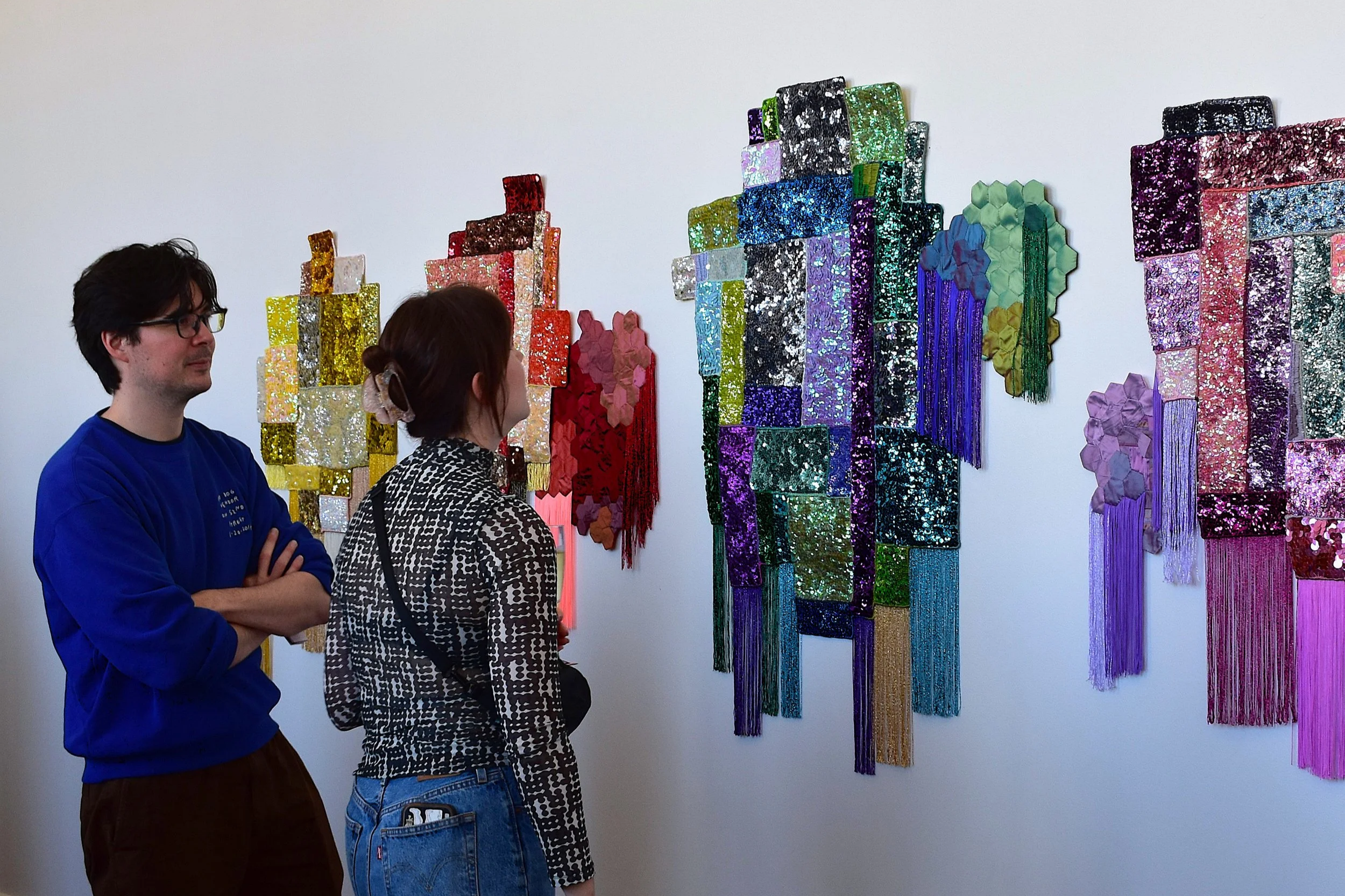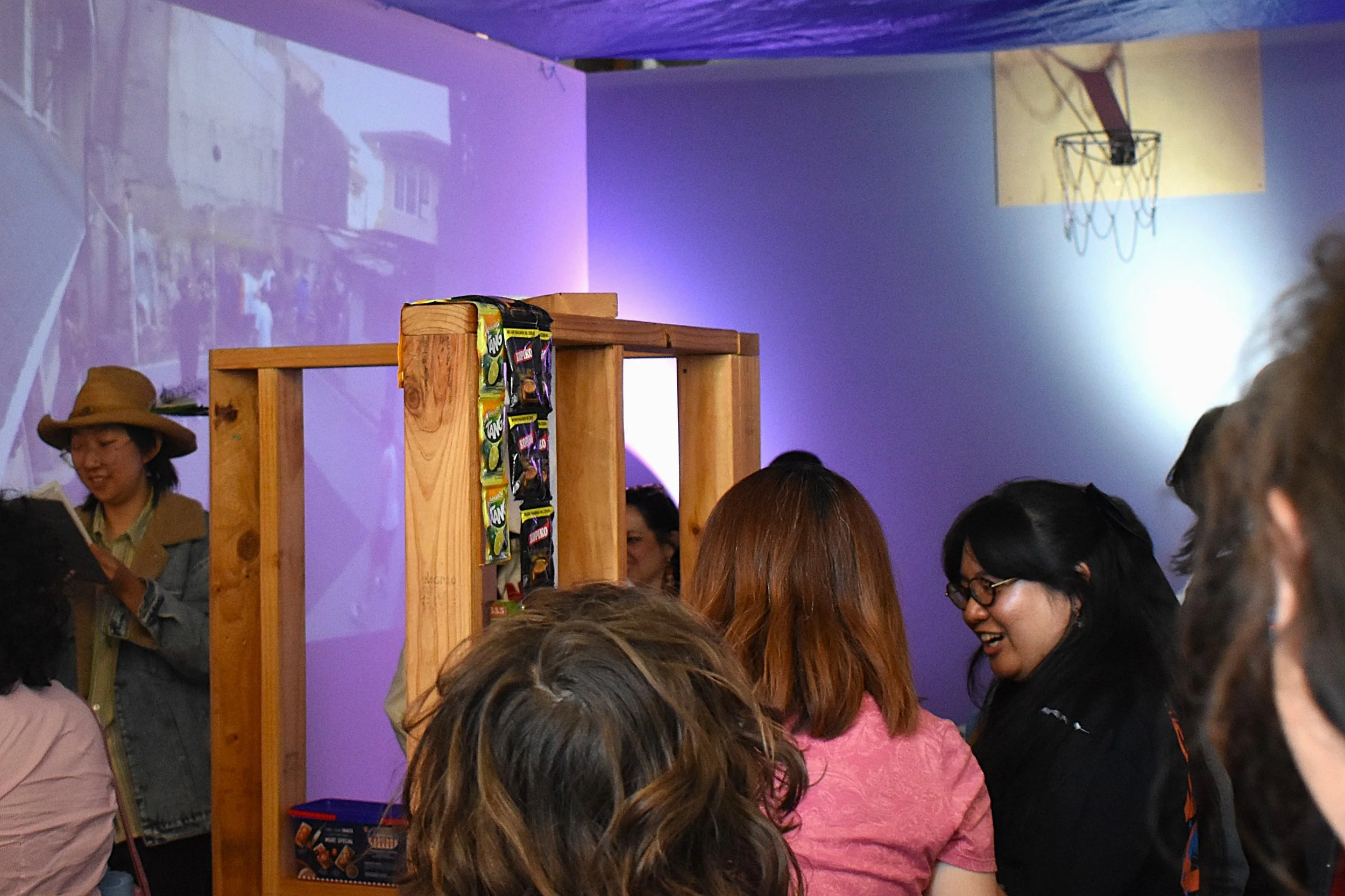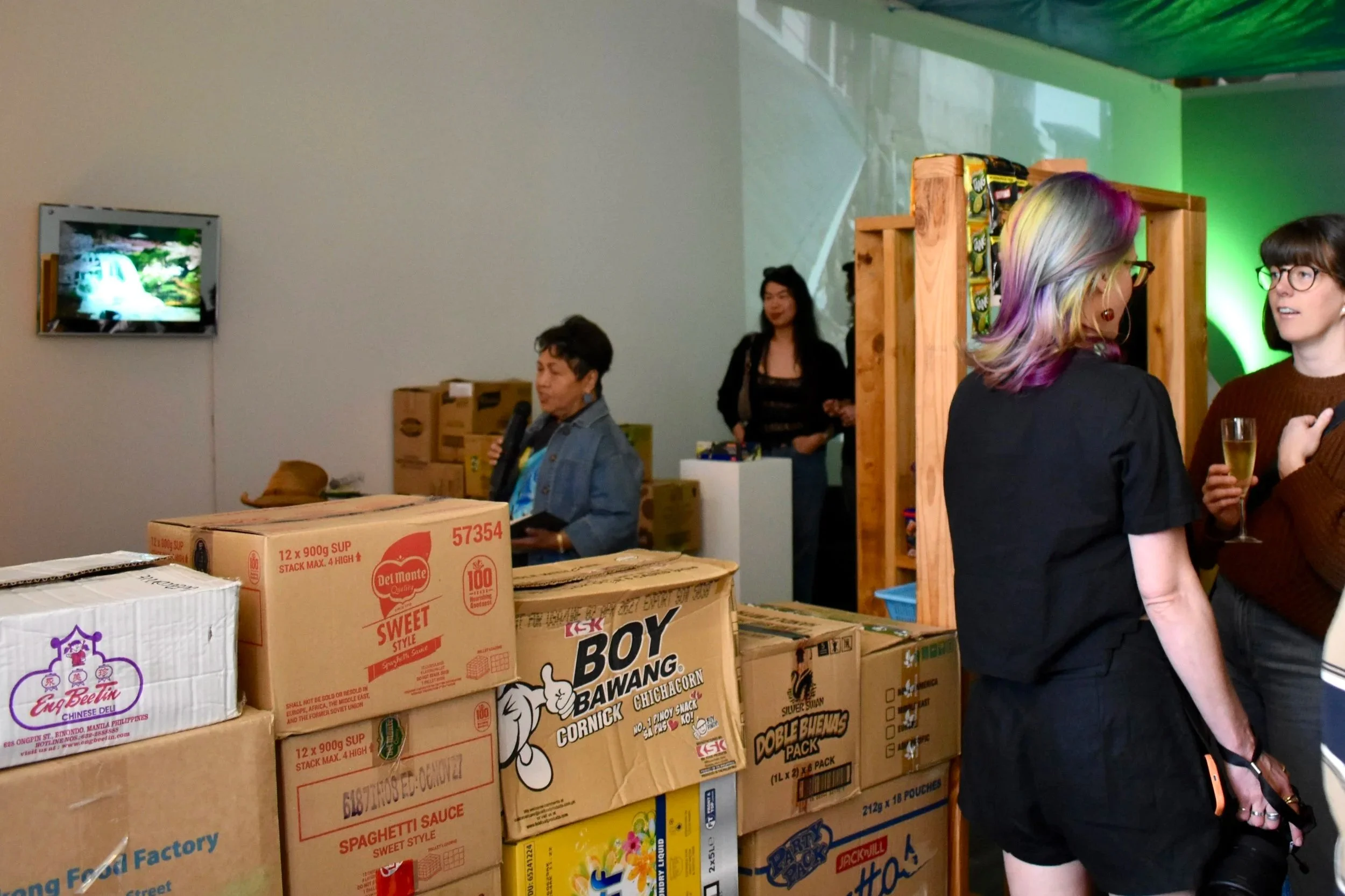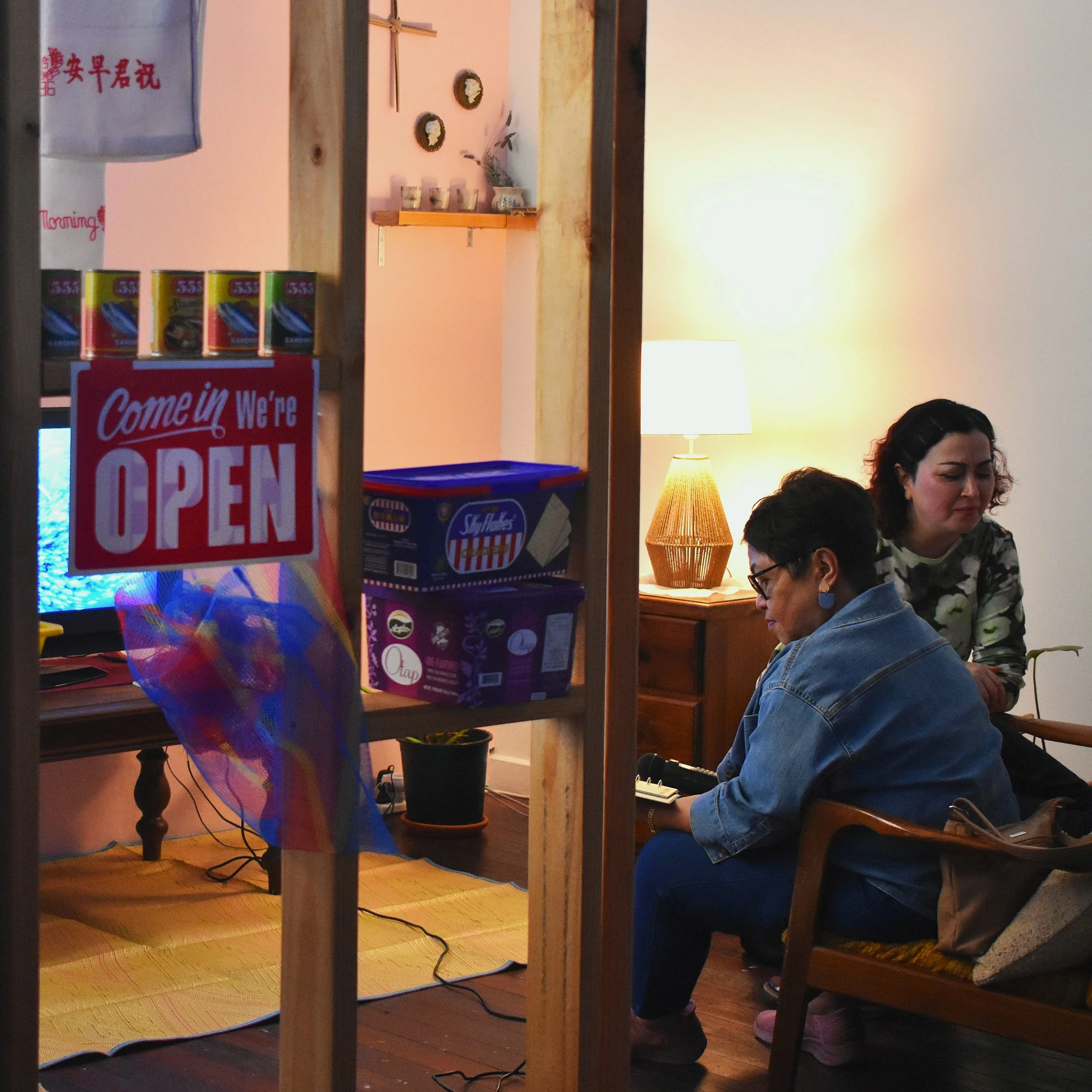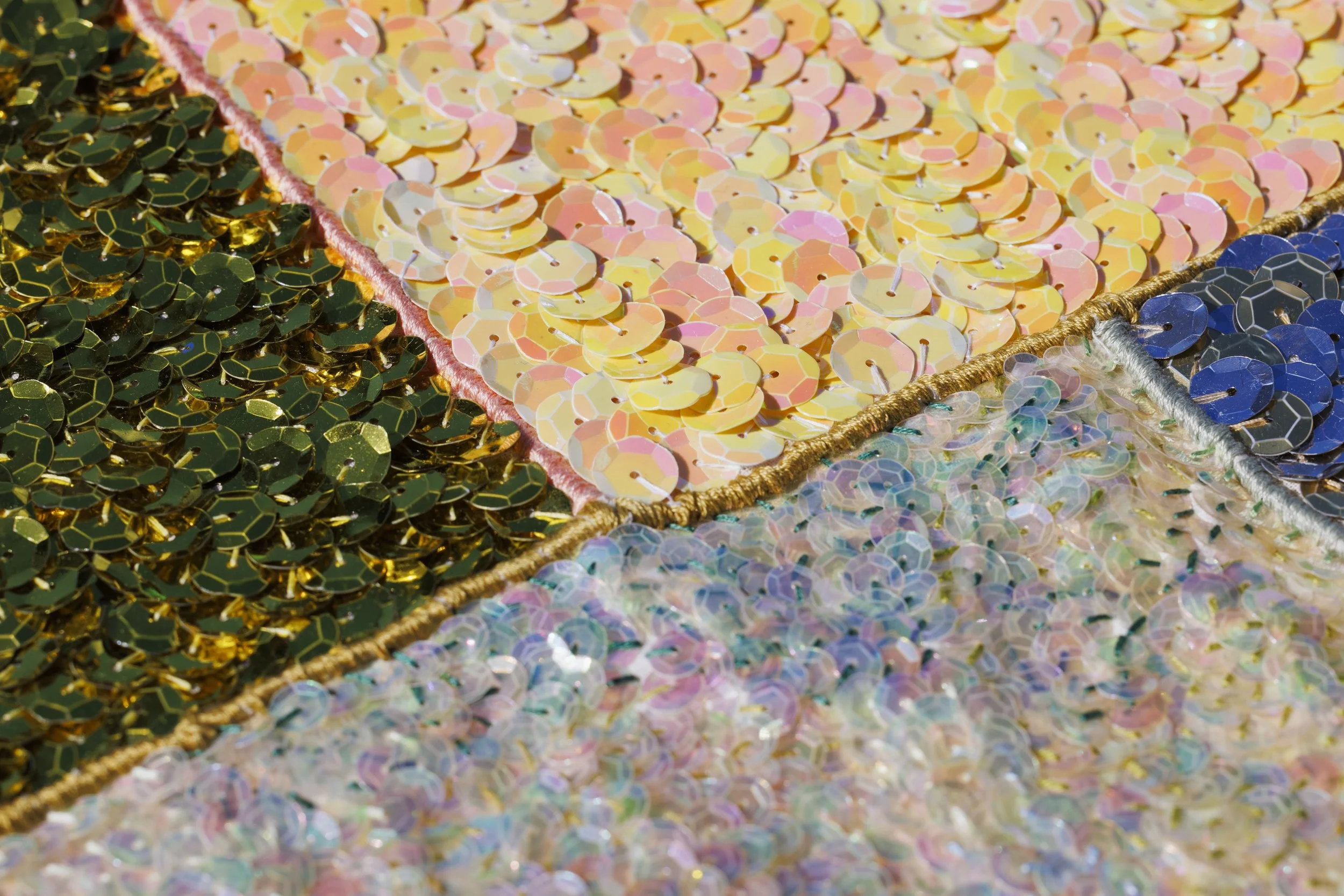
In Still Moments by Carly Snoswell & Slam Dunk by Alyssa Powell-Ascura.
Carly Snoswell
Carly Snoswell is a contemporary textile artist living and working on Kaurna Land. Historically her practice has examined fandom and the creation of craft objects as odes to particular pop-cultural phenomenon through gendered and labourious forms of craft making. In recent years, Snoswell's practice has broadened to explore personal experiences of motherhood, infertility and maternal lineage.
Snoswell has exhibited widely, most recently in Radical Textiles (2024-5) at the Art Gallery of South Australia. She was Co-Director of FELTspace ARI, Adelaide and has participated in studio residencies in Adelaide, Melbourne, India, New York, Japan and Iceland. In 2019 Snoswell completed a Masters by Research at the South Australian School of Art. She also works in the Youth Arts sector running workshops and developing public programming. Snoswell has completed successful Public Art projects including a Floating Art commission (2023) on the iconic Popeye boat (SA).

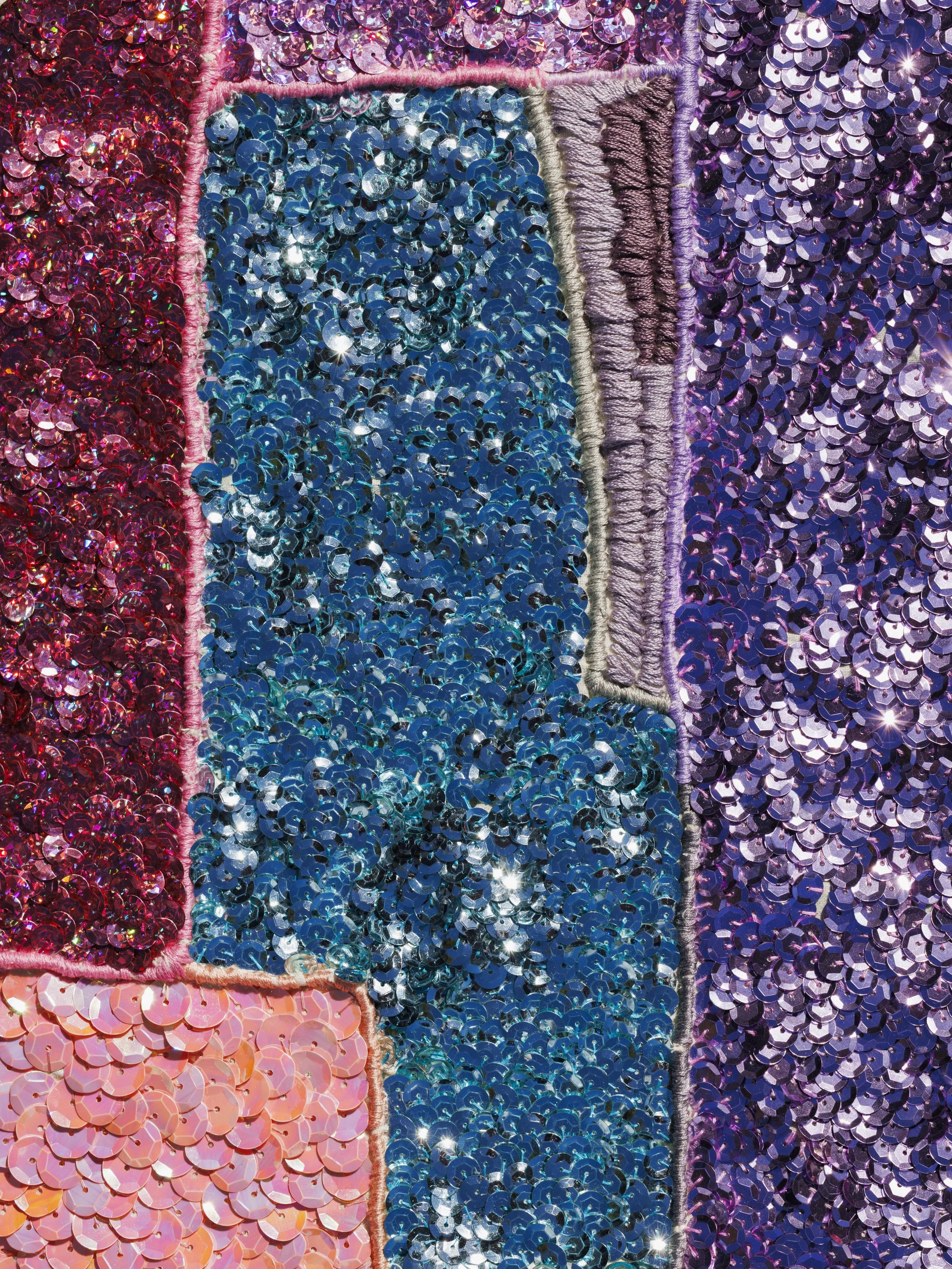
Time is a strange thing; finite and endless, sectioned into minutes, hours, days, years that pass experientially in ways that defy this imposed order. Snoswell’s work asks us to consider time in its multiplicity; as cyclical as the coming and going of the tide, as constrained by outside forces, as ours to dictate.
Central to the work is the time in which it emerged and the convergence of threads this moment is marked by. It comes after Snoswell’s work for Radical Textiles; a way, she tells me, of processing the love and grief of the coming end of her grandmother’s time and the need to preserve familial stories for those left behind and yet to come. This was compounded by Snoswell’s own infertility journey; she described this convergence as requiring her to consider her maternal lineage as one that was shortening, finite in ways it hadn’t seemed before.
It is one thing to experience time quickening for those around us; another for our own time to suddenly be constrained, as it was by the arrival of Snoswell’s foster daughter during the making of this work. Nothing quite contorts time like an infant, stretching out hours and devouring days, moments dragging and gone in an instant, studio days folded into the short stretch of a nap or the scant hours between their bedtime and our own.
Rather than constraining, Snoswell talks of this as lending itself to her methods of making; the construction of smaller textiles works, imbued with the labour of countless punctures of the needle to hold countless sequins in place or to bring together a dozen finely made quilted patches, all of which ultimately coalesce into a larger, startling whole. Rather than a record of restriction, Snoswell instead sees each small section as a record of its time; of those hours spent in quiet, meditative process, of a moment reclaimed, each a small victory that propels her onwards to the next.
In these fragments, time is not something that passes without our knowledge or extends beyond our patience; instead it moved to the rhythm of the needle, punctuated by each sequin or mark and their rolling path across calico and silk, furling and unfurling along a path only their maker knows. Small acts of labour build, each fragment more than the sum of its parts and the work all of that again, each catch of the light an ode to the ways in which moments make us. The beauty of the work is inextricable from the small actions that made it, repeating just as the minutes, hours, days, the push and pull of the tide. Looking across each moment, we see that time is no longer so strange.
Jess Taylor
Alyssa Powell-Ascura
Alyssa Powell-Ascura is an award-winning, multi-hyphenated “slashie”, primarily known as a socially engaged visual artist, writer and curator.
Her practice is deeply embedded in bayanihan, which refers to acting within a framework that prioritises community, focusing on a collaborative approach. Her work intricately holds space for an open dialogue, intertwining personal history with broader societal narratives.
Powell-Ascura was the inaugural artist recipient for pilot programs such as the Delima Residency (2023, Malaysia) and Watch This Space x FELTspace Artist Exchange Program (2024, Mparntwe/Alice Springs). Her first solo exhibition, Halo-halo (2024) received The City of Adelaide SALA Award (2024). Recent achievements include being appointed The City of Adelaide Emerging Curator (2025) and receiving a Guildhouse Catapult Mentorship (2026).
She is currently undertaking a mentorship with internationally renowned Filipino artists Alfredo and Isabel Aquilizan.
If she’s not talking to the local Aunties and writing about food and culture, she can be found by the beach or singing karaoke late at night.

HOME COURT
Ang barangay, parang napeste
Natambakan agad kami ng bente
Parang bansa’y nagkaleche-leche
At nare-elect ang presidente
The barangay (community/fans) seems cursed
We immediately got down by twenty points
It feels like the country is going to ruin
And the president is getting re-elected
Lyric from Pag Nananalo Ang Ginebra
Gary Granada
Under the canopy of the largest open air public space in my mother’s home town we sat and watched a young girl be crowned ‘Little Miss Albuera’ upon a flimsy stage in the middle of a basketball court. She professed her love to Jesus and her pride of country as her parents nodded and smiled in the bleachers. A City Councillor quietly collected donations as a group of kids played ball on the fringes of the court.
The night prior the town had hosted a gala celebrating the philanthropic efforts of local families (mainly women) who had moved abroad, my mother being one of them. I was both spectator and spectacle that night; a witness to a community gathering repurposing public space out of necessity, and an outsider peering in on a culture that was only understood through the storytelling of my migrant mother.
In the Philippines, the basketball court inhabits a contradictory position—introduced as a tool for the American’s colonisation of the country—now claimed as one of the country’s most enduring and freely accessible public spaces. What could be historically read as a pedagogical tool for cultivating nationalism amongst its people; decades of transformation, grassroots use and improvised community-making has brought social capital and value to the site.
The inheritance of this hybridity is older than basketball itself. In an attempt to stamp out the Spanish colonial cockpit fight, the Philippines have constructed a liminal space; one in which the impact of colonial power is momentarily suspended and symbolically restaged via a ‘contest’ or ‘fight’. The basketball court and the fandom it generates occupies this zone evanescently—a bounded arena where national angst and aspiration can be played out, win or lose.
Obsession and patriotism coalesce in art and community. Songs and oral histories join the country’s archive in which a single game becomes a vessel for grief, defiance, and collective joy moving far beyond the scoreboard. Gary Granada’s popular song laments his country, the love of the game, and the resistance and morality of Filipino culture.
Alyssa takes this paradox as a starting point. Through public program activation and installation, we return to the court, not as an arena of spectacle but as one of everyday commonality. A space of encounter, contest and creativity sustained by those who use it, usually in makeshift form, far from the basketball stadium known by the west.
The use of the karatula—a tarpaulin banner that blankets Philippine streets for advertising, campaigning and civility, also makes visible the very forces community use of basketball courts quietly resist: sponsorship, political persuasion and economic pressure.
As I think back to that moment of community gathering and competition I recognise an alternative register or reading of this cultural identity—one that recognises its claim to ground (whether that be physical or cultural) is inherited from elsewhere and forms the competitive strategies we need for survival. It is a form built by and for systems of power yet through the very existence and resistance of a community one can claim this space as shared and united in the belief of a world building system that can recover and renew.
Rayleen Forester
Indepedant Curator and Writer