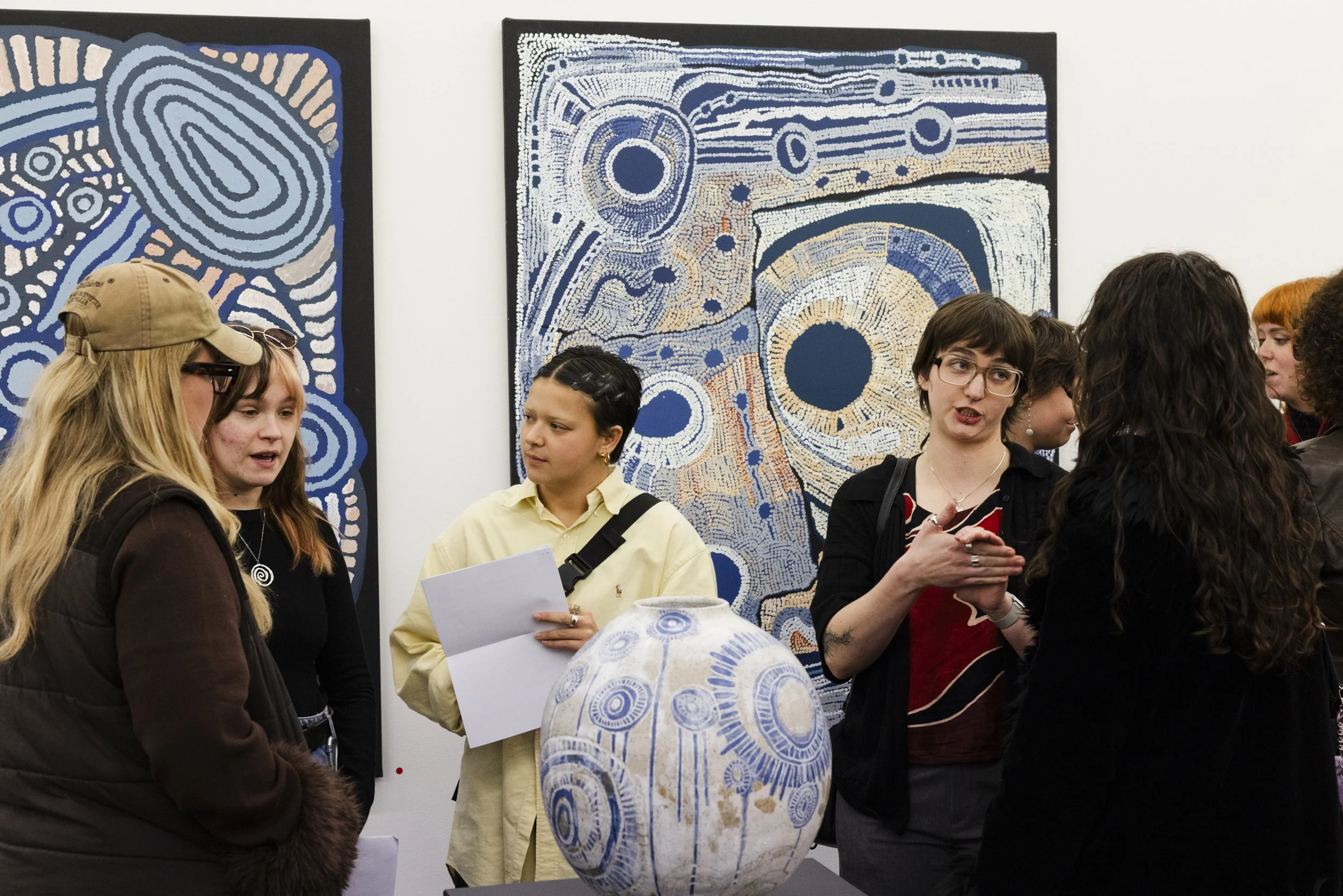
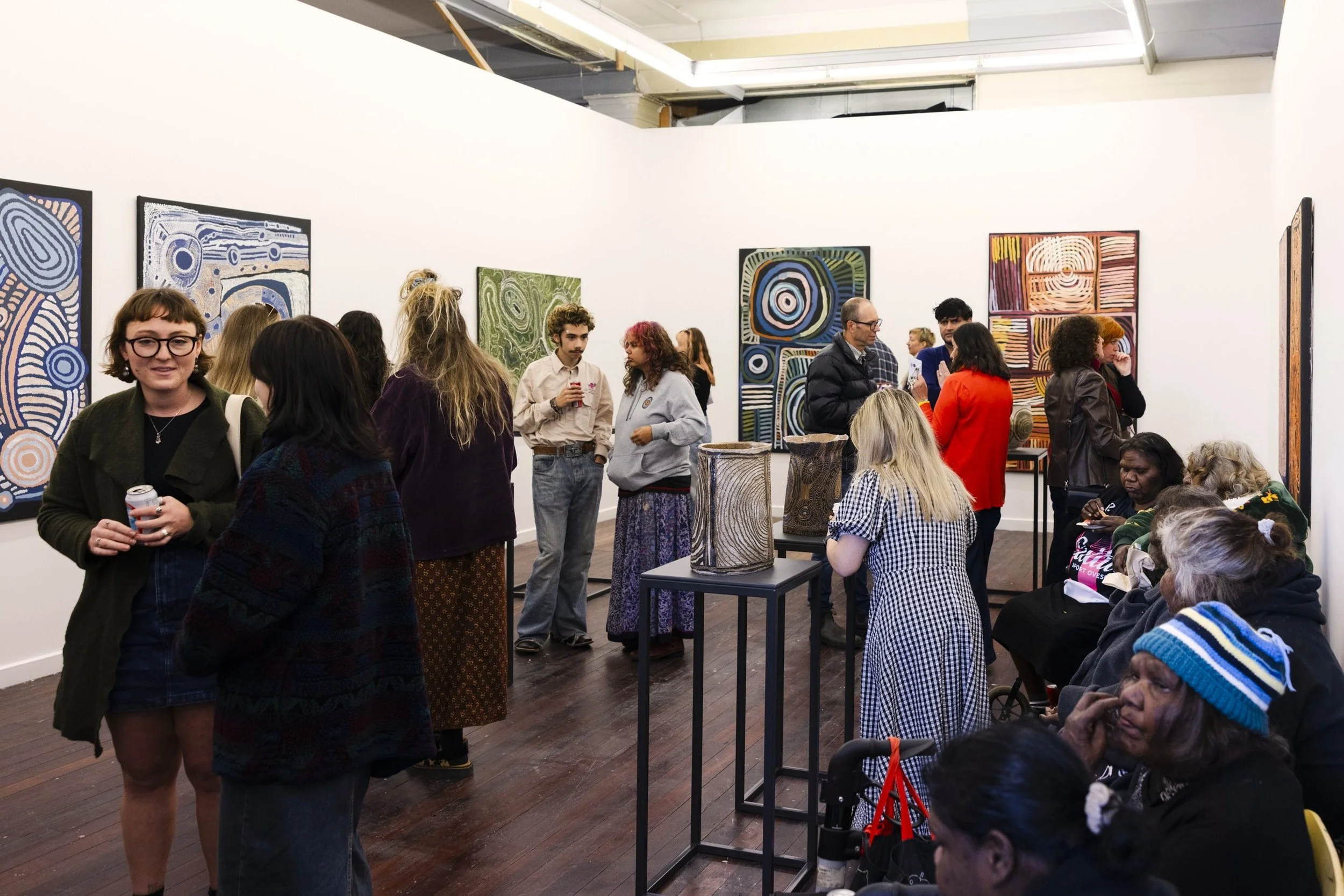
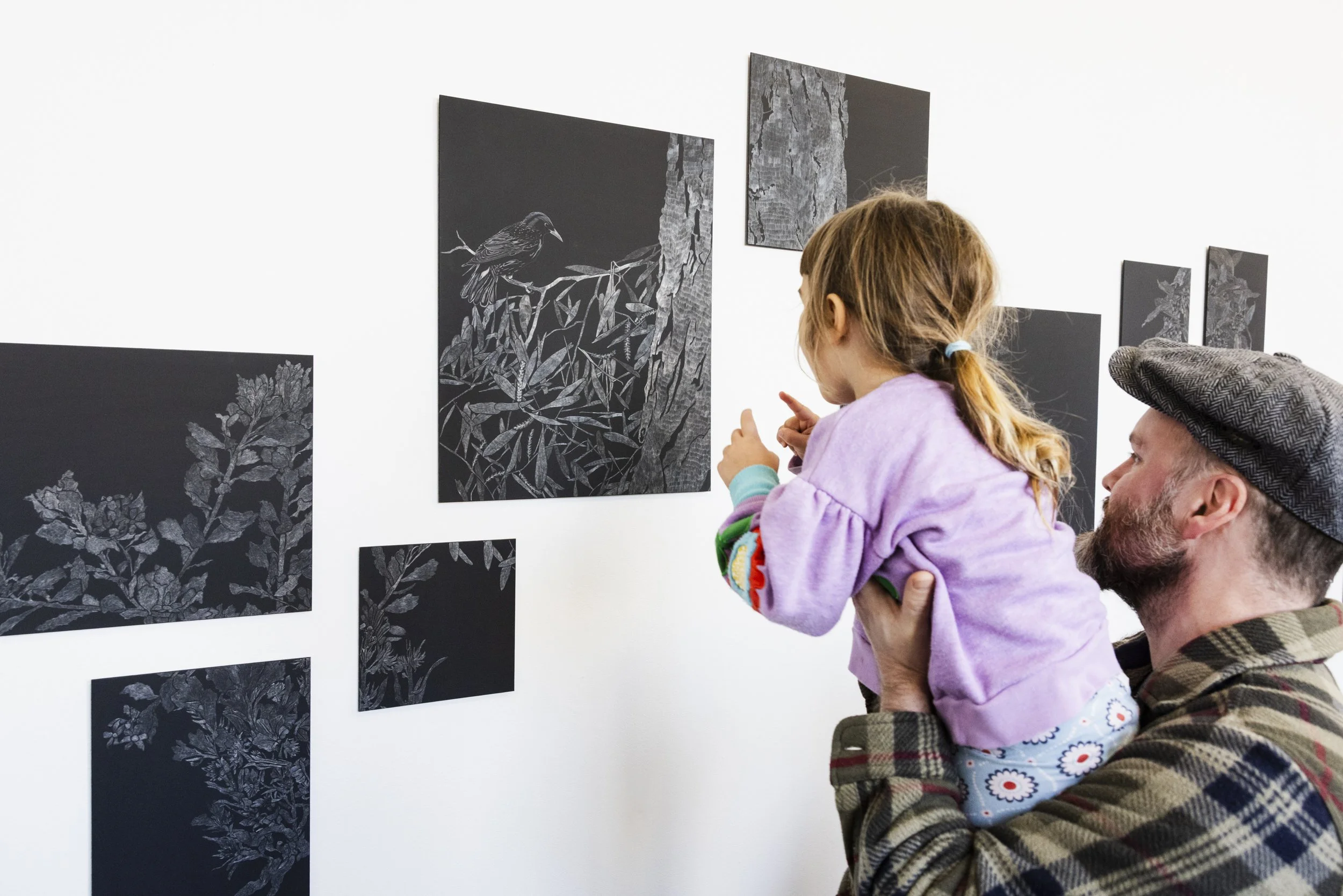
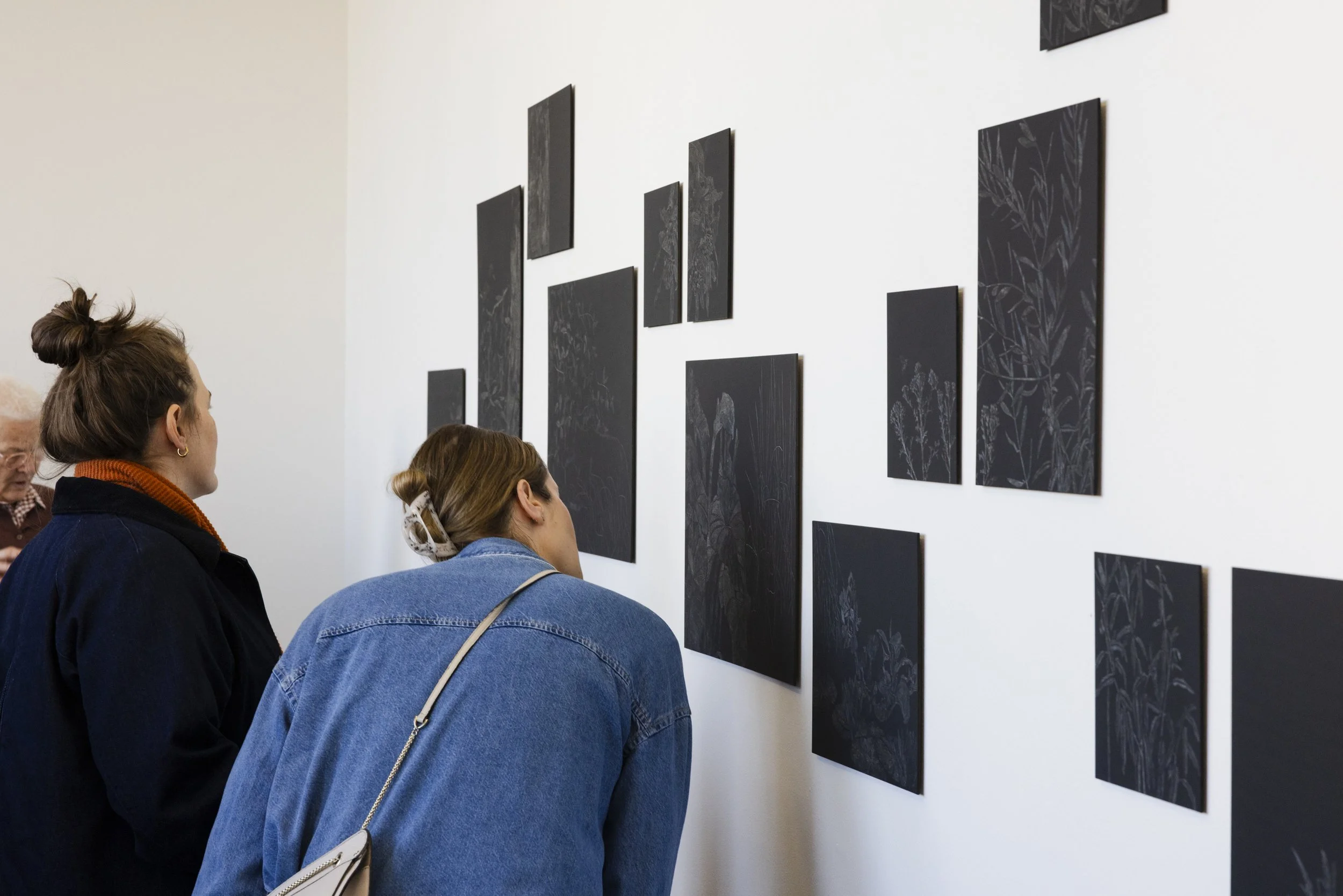
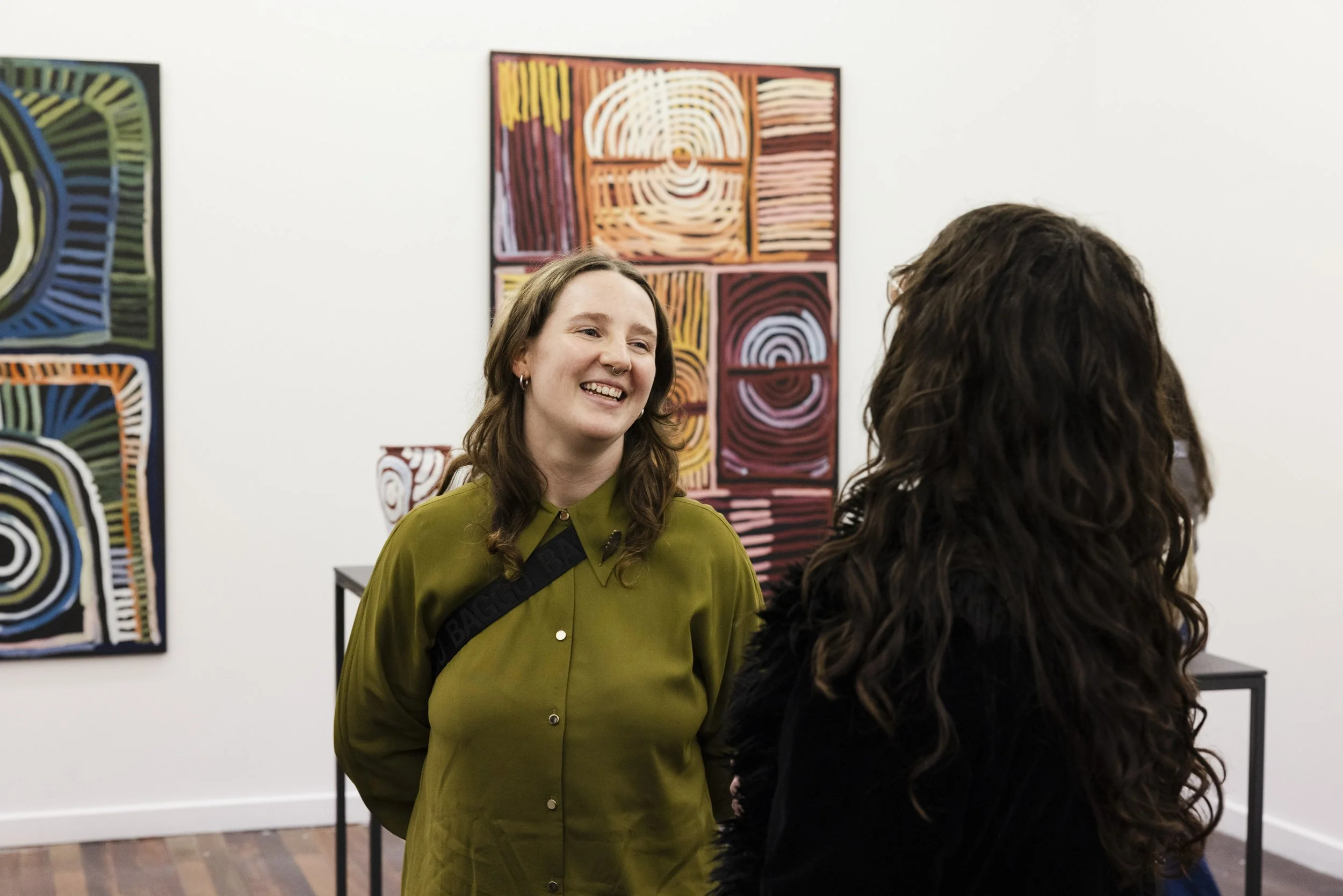
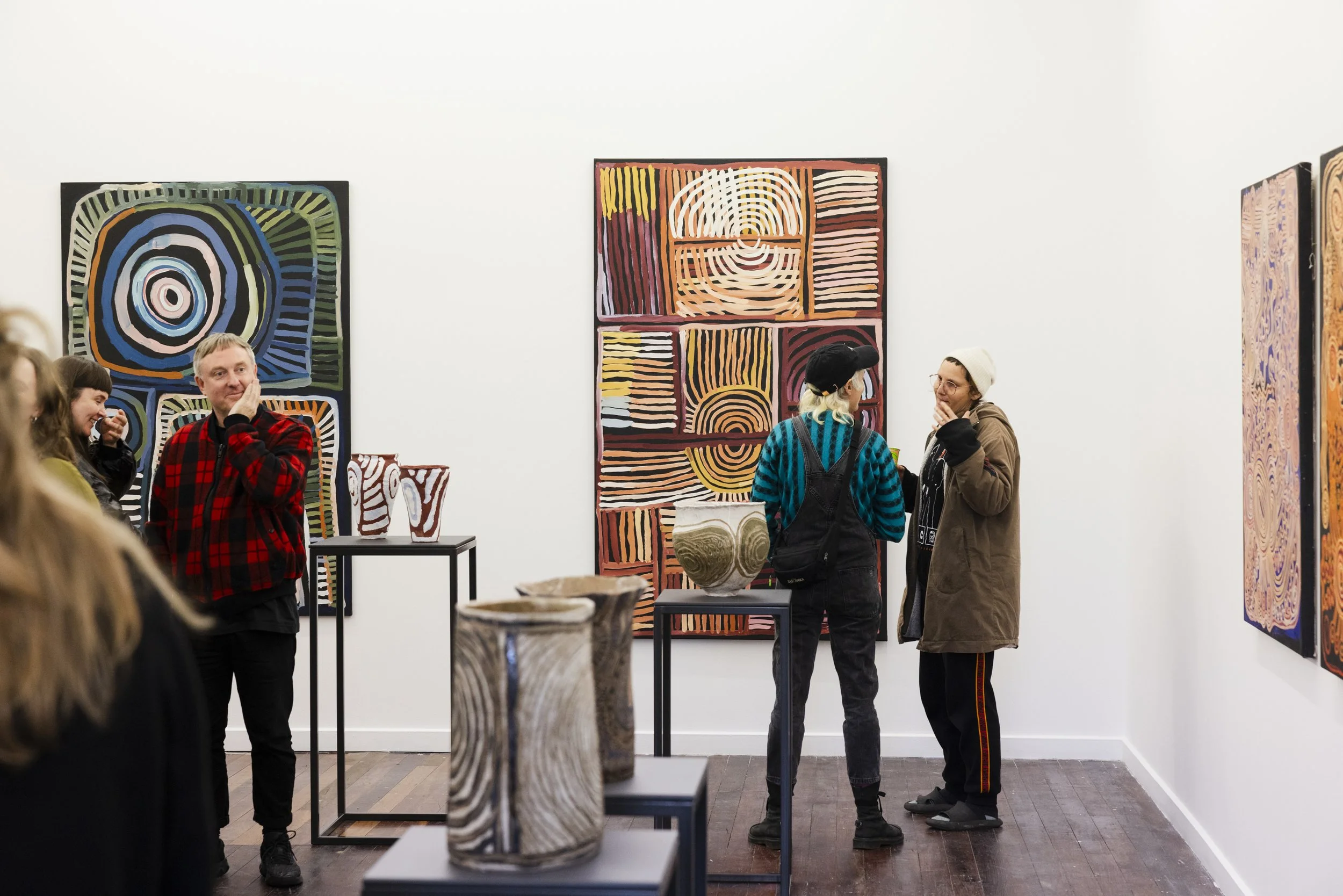
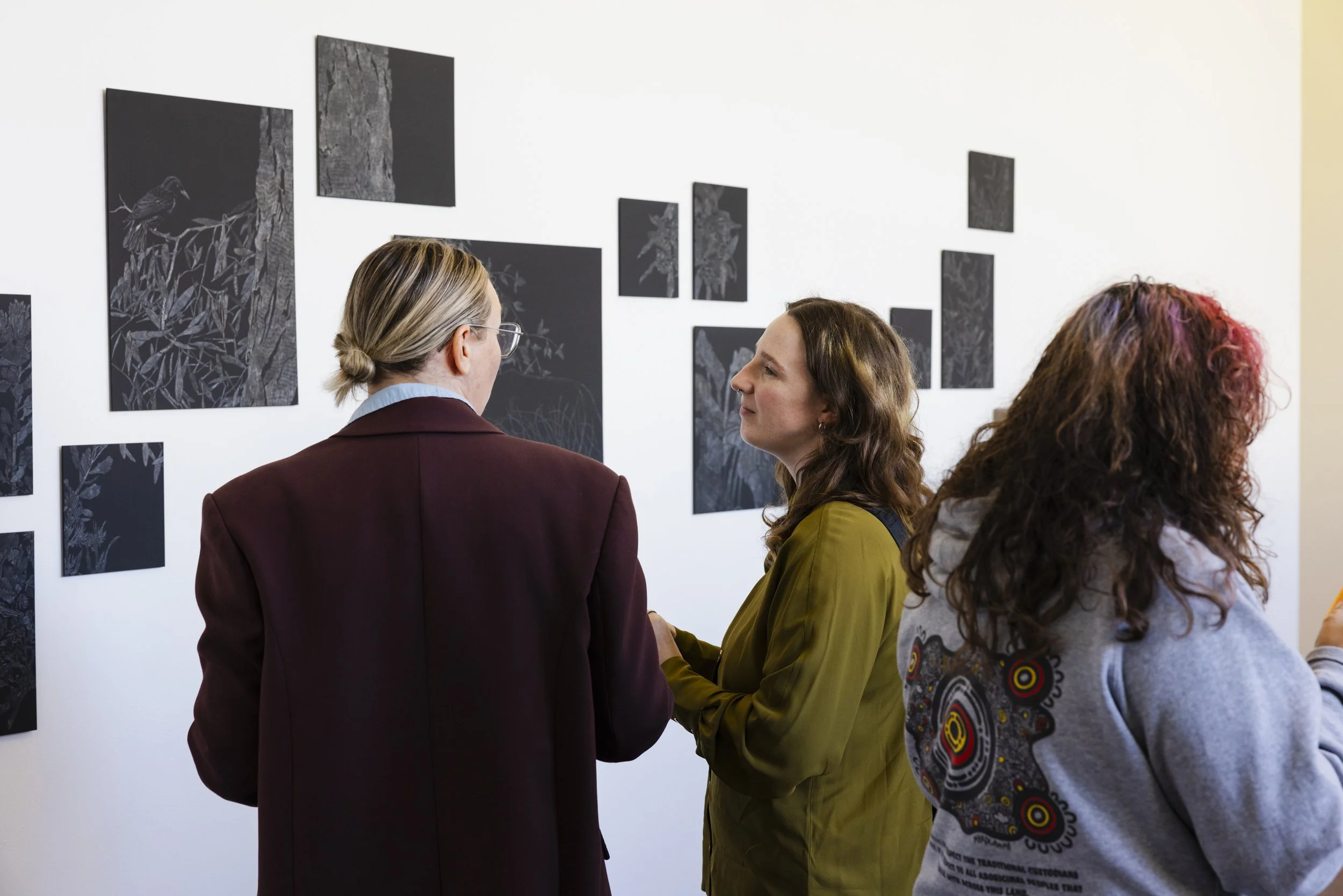
Nganampa Ngura – Our places by Iwiri Arts & The Green Wallpaper by Asha Southcombe.
Iwiri Arts
Since its inception in 2021 Iwiri Art Studio has rapidly established itself as a highly regarded Studio. Iwiri creates a space for artistic expression that promotes cultural retention, transmission and wellbeing across the generations while also providing Anangu artists with commercial opportunities to produce economic benefit for their family and community.
Iwiri Artists range from highly experienced elders and knowledge custodians through to younger emerging artists. Iwiri studio is used by Anangu artists living in Adelaide as well as artists from the APY lands who are visiting for health or social reasons. The Art Studio has a strong ceramics and painting program and is experimenting with textiles. Iwiri have links to the following galleries across Australia: JamFactory (AdelaideSA), Art Images Gallery (Adelaide SA), Short St Gallery (Broome, WA), Gallery of Central Australia (Yulara NT), Aboriginal Contemporary (Sydney NSW) and Art Ark (online).
Iwiri's membership of the Indigenous Art Code and Ku Arts reflects a commitment to working in ethical ways and collaborative ways that centre and promote Anangu voice and artistic expression.

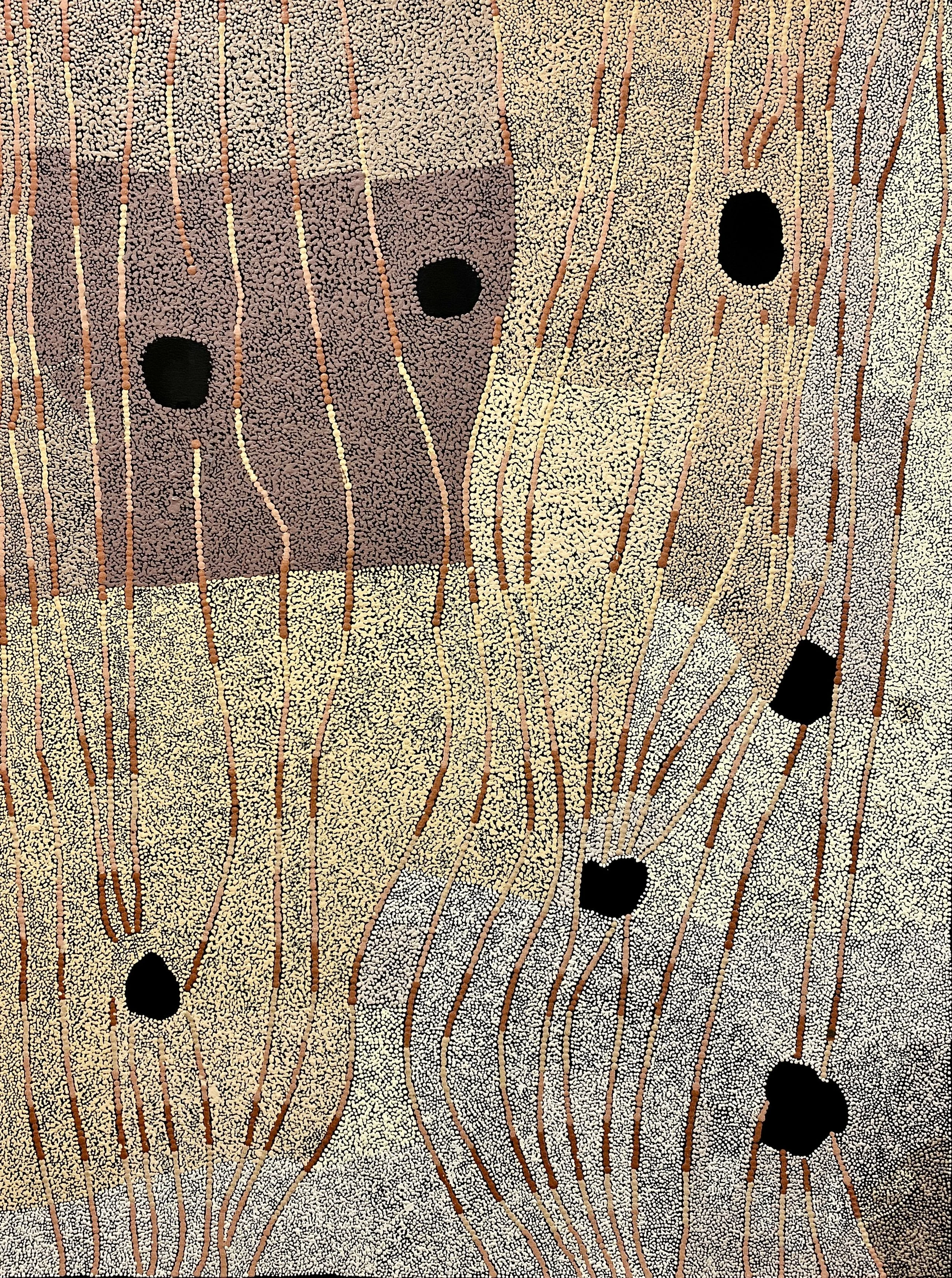
Nganaṉa painting nyangangka nganaṉa nganampa ngura kutju paintamilalpai nganampa kulintjanguṟu kutju kuliṟa nganampa nguratjara munu nganampa aṟa tjuṯa kuliṟa waṉaṟa palyalpai irititja munu kuwarikutu.
In our paintings we are representing our Country as we see it in our mind’s eye, holding it deep in our memories. We always follow our cultural ways of being and doing, as we have from time immemorial to the present day.
Iwiri Arts
Audrey Brumby
Renita Stanley
Kunmaṉara Williams
Ruth Nelson
Elizabeth Dunn
Judy Armstrong
Inawinytji Stanley
Asha Southcombe
Asha Southcombe is an emerging artist, curator and arts worker living on unceded Kaurna Yarta. In 2021 they graduated from Honours in Art and Design at the University of South Australia after completing their Bachelor of Contemporary Art in 2020.
Asha's creative practice is based in the act of mark making, primarily drawing and scratchboard. Having a passion for both art and science, Asha’s interests lie in how these fields can influence one another, and collaborate in order to communicate information to a broader audience. Drawing from contemporary research in the field of ecology, as well as historical, social and cultural influences, their work aims to communicate the discussions being had within these fields, and encourage curiosity, deeper understanding and care for the world in which we live.
Asha’s work has been exhibited within the Guildhouse Life Lines exhibition at Adelaide Town Hall (2022), commissioned as the emerging artist in the Kedumba Drawing Award, NSW (2022), undertaken a three-month residency and exhibition at Sauerbier House (2023), been supported by a CreateSA Professional Development Grant to undertake a month long residency at Arts Itoya in Takeo-Onsen, Japan (2024), presented work as a fringe x fab resident (2025) and most recently FELTspace housewarming exhibition (2025).
Asha is passionate about engaging, learning and sharing knowledge within the local arts community and has done so through their volunteering/work across AGSA, MOD., FELTspace and ACE, as well as working with young people through Carclew programs. Her passion for working with other artists extends to her curation practice, where she was appointed Curator-In-Residence at Carclew 2022, Helpmann Academy Graduate Exhibition Project Curator 2024 and has independently curated several exhibitions across the past five years of her practice. Asha is currently working at Country Arts SA as Visual Arts Coordinator.

THE BIODIVERSITY CRISIS
We don’t feel a species going extinct like we feel a heatwave. A drought will make the news yet a weed spreading across the country is par for the course. The biodiversity crisis is intertwined yet distinct to the climate crisis and while just as important, the former gets far less attention.
Australia leads the world in mammal extinctions. Half of Australia’s forests have been destroyed, 90% of the original habitat of the Mt Lofty Ranges has been cleared. Feral cats, foxes and cane toads wreak havoc but are so widespread that there no longer exists a possibility of eradicating them. Thousands of invertebrates have gone extinct without ever even being formally named. The ravages of colonisation have impoverished our natural world, but these are not just tragedies of the past. Species are still becoming threatened, we are still clearing habitat, and the rate of extinctions has not slowed.
We are told our national parks are protected, our threatened species are protected, that when habitat is cleared, trees are replanted. So, we go enjoy nature, we go camping, hiking, swimming. We don’t feel the biodiversity crisis, so we don’t worry. But the truth is our environmental protection laws are pathetic, and our government serves us empty promises of restoration. Nature is deteriorating in Australia.
The tragedy of the biodiversity crisis is that most people are blind to it. We don’t inherently see a field of grasses and wildflowers and know they are invasive. But every year, every generation, they spread. Native species are usurped, smothered, cleared. As a population we forget how things are ‘supposed to look’. We forget how many different birds or insects we used to see, or how many our parents saw. Incrementally, we are inching toward not just extinctions but entire ecosystem collapse.
We should not just ‘let nature run its course’, that ignores the thousands of years this country has been successfully cared for and managed by First Nations People, and colonisers have essentially run it into the ground in just 200, now is not the time to take a step back.
First step: Green Adelaide has a great resource called “Adelaide Gardens: A planting guide”, check if you’re unknowingly growing a problematic weed for our area and to replace it with a native.
Yasmin Gee
Yasmin Gee is an ecologist and PhD candidate researching the impacts of land management on insects and ecosystem function.